Five years ago, the riverfront at 815 E Pete Rose Way was a ghost town of six neglected tennis courts along the Ohio River. Today it's Sawyer Point Pickleball, an 18-court dedicated facility run by a local 501(c)(4) nonprofit that drew more than 39,500 players in 2024. Most cities slap blue paint over cracked asphalt and call it a conversion. Cincinnati did the opposite, and it shows.
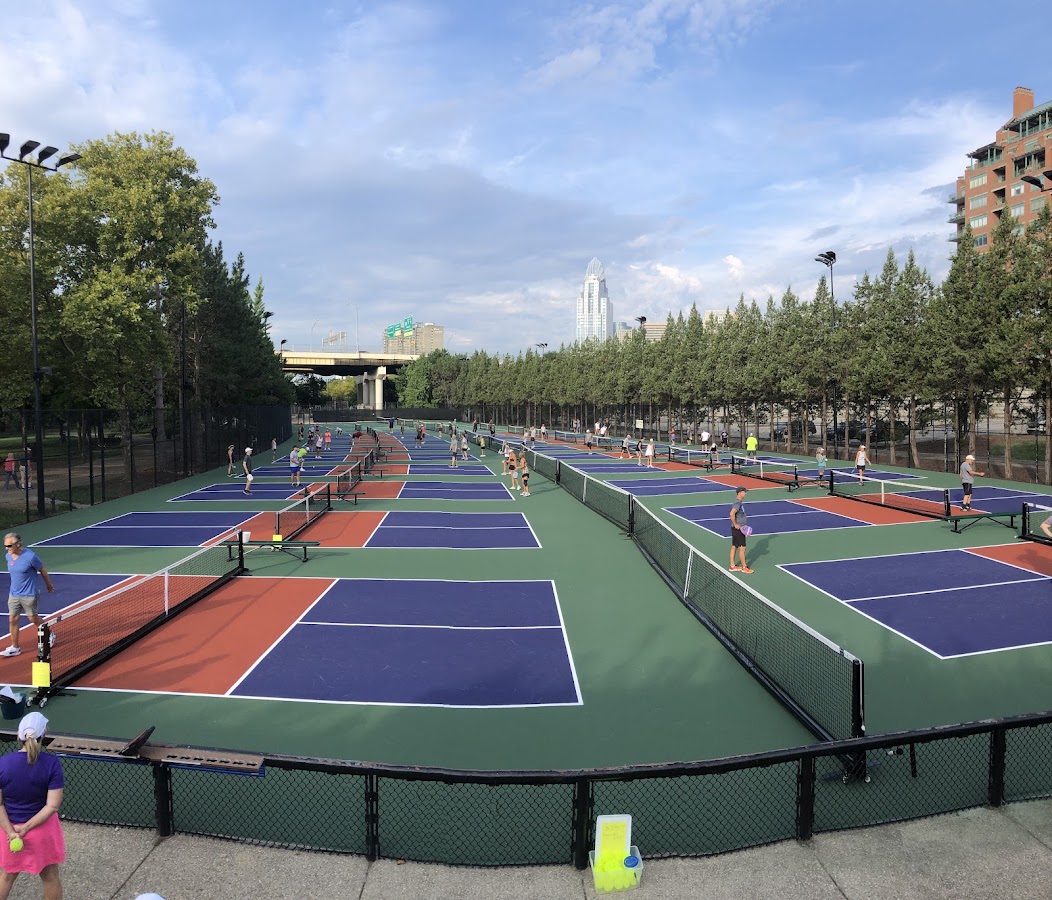
The city rebuilt a tired tennis complex into 18 dedicated pickleball courts, leaving three tennis courts intact that can be overlaid during major tournaments. The reason it worked: local players partnered with the city and raised private funds to make sure the construction was done right. Lou Sand, a regional manager for Cincinnati Parks, described the old space as "kind of like a ghost town down here" before the transformation.
Surface, spacing, and the river wind
The playing surface is tournament-grade asphalt finished with a high-traction acrylic coating that grabs the ball and keeps bounces predictable. Spacing between courts is generous — you can chase down a deep angled dink without colliding with the next match — and high, heavy fences separate the rows, so you'll rarely stop your game because a ball rolled in from three courts over.
The one physical variable you can't ignore is the Ohio River. The facility sits right on the riverbank, fully exposed, and on breezy afternoons the wind coming off the water creates unpredictable drafts. A ball that looks like it's sailing out can drop inside the baseline; a routine drop shot can drift wide. For a high-stakes match, plan to adjust your paddle angles for the breeze.
For evening play, the courts run high-efficiency LED lights until 10 PM. Unlike older metal-halide setups that leave dark spots in the kitchen and blind you on high lobs, these are angled to spread light evenly across all 18 courts. There's permanent spectator seating for 250, which makes the venue a real option for clubs hosting weekend events. Add clean restrooms, direct access to the riverfront walking path, and a live court webcam you can check before driving down, and this public venue feels closer to a private club.
Open play and the split paddle-rack system
A public park that averages 120 players a session is a logistical headache. Without a system, court time goes to whoever yells loudest or sits longest. Sawyer Point's caretakers solved that with a structured physical queue. The rules are simple, but the regulars expect you to follow them:
- Assess your own skill level honestly before you touch a paddle rack.
- Courts are split geographically into skill brackets to prevent mismatched games.
- Up to four players can queue together by stacking their paddles in a single slot.
- Peak-hour games are strictly first to 11, win by 2.
- Winners and losers both exit the court immediately when a queue is active.
That split divides the facility into two zones, which keeps beginners from getting blasted and gives competitive players the fast games they want.
| Court zone | Skill levels | Peak-hour wait | Vibe |
|---|---|---|---|
| North Courts | Beginner & intermediate | 15–30 minutes | Social, casual, steady rallies |
| South Courts | Advanced | 30–45 minutes | Competitive, fast, hard drives and tactical dinking |
The paddle racks sit in a central corridor between the two zones. When a court opens, the next four paddles are called. During peak hours, 5 PM to 9 PM, the South queue backs up — expect up to 45 minutes between games on busy weeknights. The North courts move faster, the rotation is constant, and volunteers often help newcomers learn the system. If your level sits right on the intermediate/advanced border, you face a real choice: play down on the North courts with zero wait, or test yourself on the South and spend more time standing around.
The tournament footprint
Sawyer Point was designed with professional events in mind, so it can flip from public park to closed pro-circuit venue without much friction. That's why the Association of Pickleball Professionals regularly runs major events here, including the APP Cincinnati Open and the APP Vlasic Classic. During those tournaments, more than 1,000 professional and amateur players from dozens of states descend on the riverfront. Pros like Ronan Cameron have traveled in specifically to compete, praising the layout and the way the courts blend into the park.
Keeping asphalt at that grade takes money, and a community-driven maintenance endowment has raised over $100,000 to resurface courts, replace nets, and keep the lights in shape without waiting on slow municipal budgets. For local players, the payoff is that you're hitting on the same surface the touring pros use — an energy you won't get on a painted basketball court.
Come with a group
The paddle racks are great for spontaneous drop-in, but frustrating when you just want to play with your own crew. Show up with three friends and find 120 people ahead of you, and you'll spend the evening watching other people play.
If you'd rather skip the queue lottery and run your own games, KrazyPickles is a free way to coordinate RSVPs and track scores so your group actually shows up at the same time with enough players to hold a court. Set it up once and stop refereeing the group text.